When setting up a home defense plan, where you place your hardware matters just as much as the quality of the devices you buy. A common mistake homeowners make is mounting their lenses too high or too low, which completely ruins the captured footage. At Elite Smart Home, we analyze your property layout to find the exact placement sweet spot for every device. Finding the right height means you catch clear facial features and license plates instead of just the tops of baseball caps.
Getting this distance correct protects your investment from vandals while providing the clear video evidence you need if a trespasser enters your yard.
The Sweet Spot: Why 8 to 10 Feet is Ideal
For most residential properties, mounting your surveillance lenses between 8 and 10 feet off the ground delivers the best overall performance. This height is low enough to capture clear, identifiable details of a person’s face, clothing, and height. If you go much higher, the angle becomes too steep, leaving you with useless footage of a trespasser’s shoulders and head.
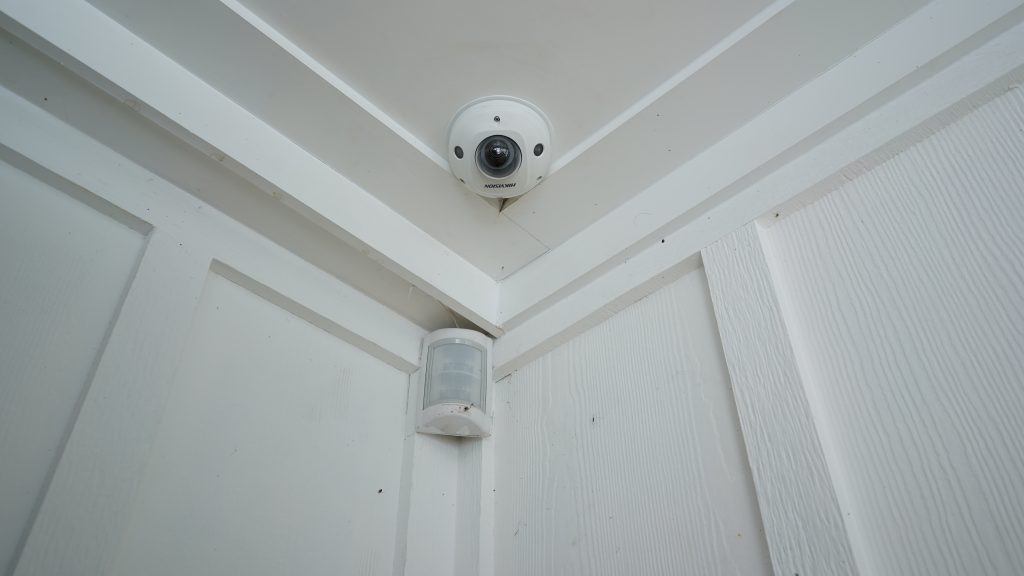
At the same time, this 8-to-10-foot range keeps the physical hardware just out of arms’ reach for the average person. A criminal cannot simply walk up and slap a piece of tape over the lens, rip the wires out, or smash the housing with a stick. Keeping the equipment at this level allows Elite Smart Home technicians to align the field of view perfectly with your property boundaries, eliminating blind spots along your walkways and entry points.
Critical Factors That Adjust Your Mounting Height
While 8 to 10 feet serves as an excellent baseline, every property has unique architectural features that require adjustments. You have to balance the structure of your house with what you actually want the lens to look at.
- Doorway and Porch Clearances: Cameras monitoring a front door often need to drop down to about 7 feet if you have a low porch roof, focusing directly on the faces of visitors rather than the porch ceiling.
- Driveway and Vehicle Tracking: Capturing license plates requires a lower angle to prevent reflection glare, meaning a mount closer to 8 feet works best near garage doors.
- Backyard and Wide-Angle Views: If you want a wide view of a large pool area or a detached shed, pushing the mount up to 12 feet increases your coverage area, though you sacrifice fine facial detail.
- Soffit vs. Wall Mounting: Attaching brackets to the under-side of your roof overhang (soffit) offers great weather protection but often pushes the height past 12 feet on two-story homes, requiring specialized tilt adjustments.
Height and Angle Breakdown by Location
Different areas of your property serve different security goals. A camera at the front door needs to identify faces, while a camera on the side of the house is meant to detect trespassing along the fence line. If you are scheduling a security camera system installation in NJ, mapping out these specific targets ahead of time saves hours of trial and error.
Here is how height choices impact your surveillance goals across standard home zones:
| Placement Zone | Recommended Height | Primary Objective | Trade-Off to Consider |
| Front Door / Porch | 7 – 8 Feet | Identifies visitors and package deliveries clearly. | Easier for an intruder to reach if not secured properly. |
| Driveway / Garage | 8 – 9 Feet | Captures vehicle makes, models, and license plates. | Headlight glare at night can temporarily blind the sensor. |
| Side Alleyways | 9 – 10 Feet | Detects movement in dark, low-visibility pathways. | High walls can cause infrared light to reflect back into the lens. |
| Backyard / Patio | 10 – 12 Feet | Monitors large open spaces and property fence lines. | Facial details become blurry at longer distances. |
Overcoming the Two-Story Camera Dilemma
If you own a two-story home, mounting hardware under the second-floor roofline is highly tempting because it provides a massive view of the neighborhood. However, the team at Elite Smart Home strongly advises against this practice for main security points. A camera mounted 20 feet in the air creates a severe downward angle. If someone walks up to your porch, you will only see the top of their head, making identification impossible for local law enforcement.
Instead, second-story mounts should only be used for general situational awareness, like watching weather patterns or checking if a gate is closed. For true protection, the primary sensors must be mounted lower on the first-floor siding or brickwork. When configuring security cameras in Margate, NJ, coastal winds and architectural styles vary, making a lower, sturdier first-floor mount much safer and more effective at capturing real data.
How Mounting Height Interacts with Daytime and Nighttime Lighting
The height of your camera directly alters how much light reaches the sensor, completely changing how well your system performs at midnight versus mid-afternoon. When a camera is mounted too high on a wall, daytime sun exposure can create huge shadows right underneath the roofline, leaving your walkways completely dark while the street looks perfectly bright.
At night, this issue shifts to your built-in infrared (IR) lights. Most residential cameras have night-vision bulbs that can only throw light about 20 to 30 feet. If you place your camera 15 feet in the air, a significant portion of that night-vision light is wasted illuminating the empty air rather than the ground below. Elite Smart Home balances your camera height with local porch lighting and street lamps so your sensors get steady light levels around the clock.
Hidden Wiring and Physical Security Concerns
Choosing the right height also determines how easily a tech-savvy intruder can disrupt your network. If you place your cameras at a lower, face-level height to get perfect details, your cables become highly vulnerable to being cut with simple wire cutters.
To prevent this, Elite Smart Home uses specialized weather-proof metal junction boxes and runs all data wires directly through the interior walls or heavy-duty conduit. This setup conceals the cabling completely, so there are no loose wires dangling near the bracket for an intruder to pull down. Combining proper physical height with hidden lines creates a secure loop that keeps your defense running when you need it most.
Guarding Your Hardware Against Vulnerabilities
Mounting your equipment at the correct height also means thinking about lighting and physical tampering. If a device is too low, it can be blinded by a simple flashlight or disabled by hand. If it is too high, nighttime infrared illuminators might not reach the ground, leaving your footage dark and grainy. Elite Smart Home balances these factors by choosing high-quality housings and secure mounting brackets that lock the camera body in place, preventing wind or intruders from altering the view.
Protect Your Property with Elite Smart Home
A professional surveillance setup requires more than just screwing a bracket into your siding. At Elite Smart Home, we specialize in positioning your equipment at the exact height and angle needed to keep your household secure. Our team eliminates the guesswork, handling the wiring, configuration, and mounting to give you a clear view of your property day and night. Contact Elite Smart Home today to schedule your consultation and find out how we can upgrade your home defense.