At Elite Smart Home, we see a lot of smart home devices get used a handful of times and then fade into the background. Motorized blinds are the rare exception, they run on a schedule you set once and then quietly handle every window in the house twice a day. That effortless daily repetition is why our clients who install them rarely ever go back to manual pull cords or wand tilts.
The technology behind these systems has also come a long way in recent years. Battery motors now last months between charges, and open standards mean shades we install for you today will still talk smoothly to your smart hub for years to come.
How Motorized Blinds Actually Work
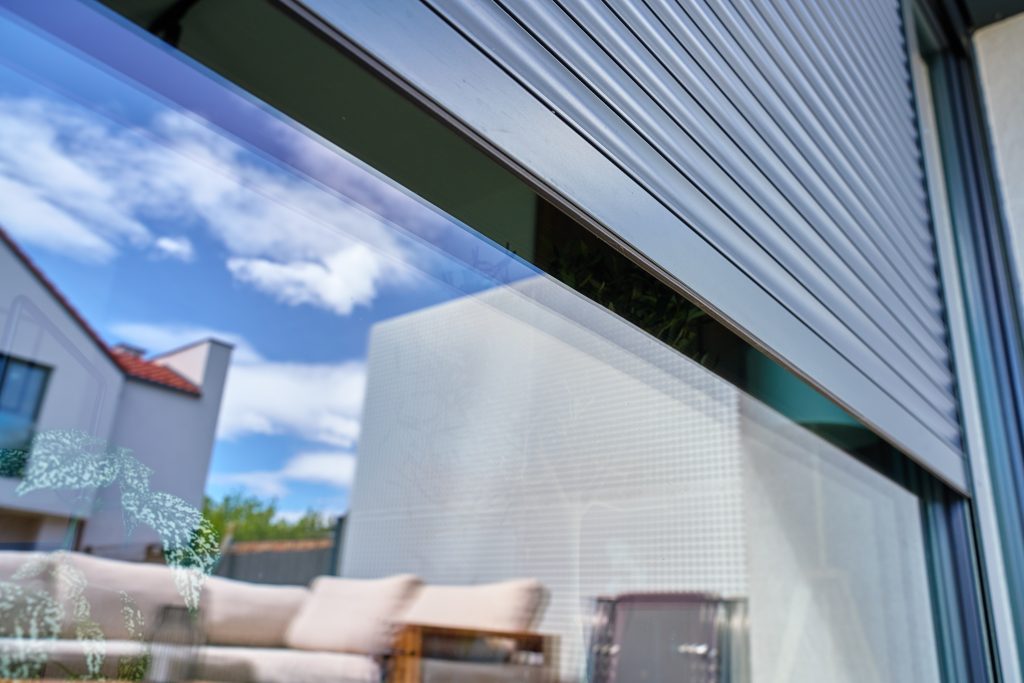
Inside the headrail of a motorized shade sits a small tubular motor, a radio receiver, and either a rechargeable battery pack or a low-voltage wire. When you tap a button, speak a command, or hit a scheduled trigger, the receiver tells the motor how many rotations to turn, which translates to a precise shade height.
The radio side is where the differences matter. Most systems use one of a few protocols:
- Proprietary RF (433 MHz or similar): reliable and simple, usually paired with a branded remote and a bridge for app control.
- Zigbee or Z-Wave: mesh networks that let shades relay signals through other devices, useful in larger homes with thick walls.
- Matter over Thread: the current cross-platform standard, which lets one shade respond to Apple Home, Google Home, and Alexa without a vendor-specific bridge.
- Wi-Fi direct: easiest to set up for one or two windows, but a dozen Wi-Fi shades can crowd a home network.
Repeatability is what separates good motors from cheap ones. A quality motor returns to the same intermediate position within a few millimeters every time, so a row of four shades on one wall stays visually level instead of drifting into a staircase.
The Daily Wins You Notice in the First Week
Scheduling is the feature people underestimate. Set the bedroom shades to open at sunrise plus 20 minutes and the west-facing living room shades to drop at 3 p.m. in summer, and the house starts managing light without anyone touching a thing.
Scenes are the second win. A single “Movie” command can close every shade in the great room, and a “Leaving” routine can bring them to a privacy-but-not-dark position so the house does not look empty. Tall stairwells and transom windows that nobody has adjusted in years suddenly become usable, which is often the reason homeowners start the project in the first place.
Energy Savings That Show Up on the Utility Bill
Windows are the weak point in almost every building envelope. According to the U.S. Department of Energy, heat gain and heat loss through windows account for roughly 25 to 30 percent of residential heating and cooling energy use, and window coverings are one of the cheapest ways to blunt that.
Manual shades only help when someone remembers to use them, and nobody is home at 2 p.m. on a July afternoon to lower them. Automation closes that gap by tying shade position to sun angle, indoor temperature, or a simple time schedule. Cellular honeycomb fabrics paired with motors do the most work here, since the trapped air pockets add measurable R-value on top of the shading.
Cordless Design and Child Safety
Looped cords on window coverings remain a recognized strangulation hazard for young children, and the Consumer Product Safety Commission has pushed the industry toward cordless designs for exactly that reason. Motorized shades eliminate the cord entirely, which is why they show up so often in nurseries and playrooms.
Parents of older kids appreciate a quieter benefit: shades that cannot be yanked off their brackets. There is no cord to tangle, no chain to snap, and no reason for anyone to climb furniture to reach a high window.
Battery, Hardwired, or Solar: Picking a Power Source
Power choice drives both cost and how much wall work the job involves.
- Rechargeable battery wands: the most common retrofit option. A single charge typically lasts 6 to 12 months for a mid-size shade cycled once a day, and recharging takes a couple of hours with a USB-C brick.
- Solar trickle chargers: a small panel stuck to the glass keeps the battery topped off on sun-facing windows, which usually removes recharging from your to-do list altogether.
- Hardwired low-voltage: the best answer for new construction, remodels with open walls, and heavy shades over 8 feet wide. No batteries, faster motor speeds, and the cleanest long-term reliability.
If drywall is already closed up, battery is almost always the practical call. Running low-voltage cable to an existing second-floor window means opening walls or ceilings, and the labor often costs more than the shade.
Planning a Whole-Home Rollout
Measuring is where DIY projects go sideways. Inside-mount shades need width measured at three heights, squareness checked with a diagonal, and a documented light-gap allowance, because a half-inch error on a blackout bedroom shade is the difference between dark and almost dark.
Working with an installer also helps at the programming stage, when scenes, sun sensors, keypads, and voice assistants all need to agree with each other. If you are pricing out professional installation of motorized blinds in NJ, ask specifically how the integrator handles fabric samples, since a swatch held up to your own window at 4 p.m. tells you more than any catalog.
Rooms and Homes Where They Pay Off Most
Not every window justifies a motor. The ones that consistently do:
- Two-story windows and stairwell glass that require a ladder to touch.
- Primary bedrooms, where a scheduled wake-up open beats an alarm clock.
- West and south exposures with furniture, art, or hardwood that fades.
- Kitchens and baths, where reaching over a sink or tub is awkward.
- Second homes that sit empty for weeks and benefit from remote control of privacy and solar heat.
That last case is common along the coast. Owners installing motorized blinds in Avalon, NJ often run everything on a vacation schedule so the house looks lived in and the interiors stay protected from salt-air glare between visits.
Mistakes That Make Motorized Blinds Feel Gimmicky
The most common one is mixing three brands across one house, which leaves you with three apps and no unified scenes. Pick one platform, confirm it supports Matter or your existing hub, and stay with it even if a competitor’s fabric is slightly cheaper.
Second is skipping physical controls. Voice and phone apps are convenient until guests, kids, or a dead Wi-Fi router are involved, so a wall keypad or tabletop remote in each main room keeps the system usable by everyone. Third is over-automating: two or three reliable schedules beat a dozen conditional rules that nobody remembers setting.
Start With One Room and Expand
Pick the two or three windows that annoy you most, motorize those on a platform you can grow into, and live with the schedules for a month. That is usually all it takes to decide which rooms get added next. Reach out to the team at Elite Smart Home today to map out your room-by-room upgrade plan.